Posts

Showing posts with the label Overbought

Schaff Trend Cycle: A Powerful Momentum Indicator for Identifying Trends
Image
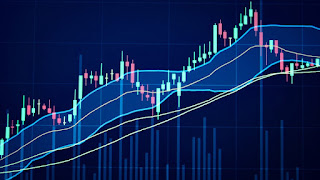
By:  Ivan Cavric   Schaff Trend Cycle is a momentum indicator that is designed to identify trends in the market. It was developed by Doug Schaff and is based on the principle of combining two popular indicators - the Moving Average Convergence Divergence (MACD) and the stochastic oscillator. The Schaff Trend Cycle indicator is calculated using the following steps: Calculate the MACD by subtracting the 26-period exponential moving average (EMA) from the 12-period EMA. Calculate the signal line by taking a 9-period EMA of the MACD. Calculate the slow stochastic oscillator using the high, low, and closing prices over a specified period. Calculate the Schaff Trend Cycle by applying a 10-period EMA to the slow stochastic oscillator. The resulting indicator is a smoothed version of the slow stochastic oscillator that combines the power of the MACD and stochastic oscillator to identify trends in the market. One of the main advantages of the Schaff Trend Cycle indicator is its ability...

Keltner Channels: A Unique Approach to Identifying Overbought and Oversold Conditions

Image
By:  Ivan Cavric   Keltner Channels is a popular technical indicator that can be used to identify overbought and oversold conditions in the market. It was developed by Chester W. Keltner in the 1960s and is based on the principle of using a moving average and a range-based calculation to create upper and lower bands around price action. The Keltner Channel consists of three lines: The middle line, which is a moving average of the price action. The upper line, which is calculated by adding the average true range (ATR) of the instrument to the middle line. The lower line, which is calculated by subtracting the ATR from the middle line. The ATR is a measure of volatility and is calculated by taking the average of the true range over a specified period. The true range is the greatest of the following: The difference between the current high and the previous close. The difference between the current low and the previous close. The difference between the current high and the current...