Posts

Showing posts with the label investing

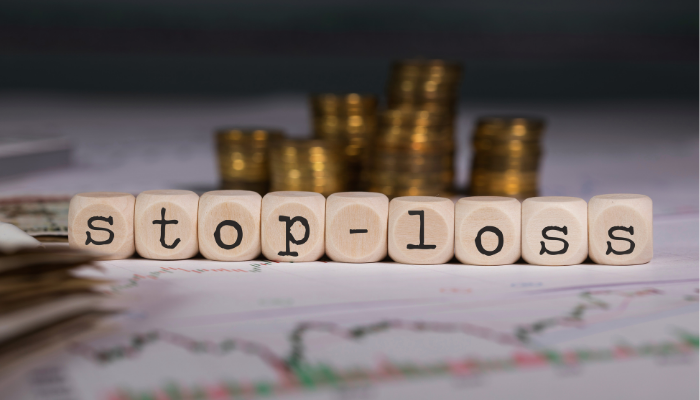
Mastering Risk Management with Stop Losses

Image
By: Ivan Cavric Hey there, fellow traders and investors! Today, let's talk about stop losses—a nifty little tool that can save your behind in the wild world of trading. Now, if you're not familiar with stop losses, buckle up and get ready for a crash course in risk management. So, what exactly is a stop loss? Well, it's like a safety net for your trades. You place an order with your broker to buy or sell a stock once it hits a certain price. This helps you protect your hard-earned cash by automatically bailing out when the market starts to go south. Now, why is this important? Picture this: you're riding high on a trade, feeling like the Wolf of Wall Street, and then bam! The market takes a nosedive, and suddenly you're watching your profits evaporate faster than you can say "sell, sell, sell!" That's where a stop loss comes in handy. See, by setting a stop loss at a predetermined level, you're drawing a line in the sand. It's like saying, ...

CFDs: A Closer Look

Image
by:  Ivan Cavric CFD, or Contracts for Difference, are financial derivatives that allow traders to speculate on the price movements of various underlying assets without actually owning them. CFDs are a type of agreement between two parties to exchange the difference in value of an underlying asset from the time the agreement is entered into until it is closed. They are popular because they offer several advantages over traditional forms of investment. One of the biggest advantages of CFDs is the flexibility they offer. Traders can take short positions, which allow them to profit from falling prices, as well as long positions, which allow them to profit from rising prices. This flexibility is particularly useful for traders who believe that a particular market is about to fall and want to profit from it. Another advantage of CFDs is that they are margin products, which means that traders can gain exposure to a much larger investment than they would otherwise be able to with their ow...

Why People Invest in Penny Stocks: Understanding the Risks and Potential Rewards

Image
by: Ivan Cavric Penny stocks are low-priced securities that are traded on over-the-counter (OTC) markets or on the pink sheets. These stocks are often considered to be high-risk investments due to their low trading volume and lack of financial transparency. Despite the risks, many investors are drawn to penny stocks due to their potential for high returns. In this article, we will explore some of the reasons why people buy penny stocks. High returns: One of the main reasons why people buy penny stocks is the potential for high returns. Because these stocks are often priced at a fraction of the cost of more established stocks, even a small increase in price can result in a significant return on investment. Small investment: Another reason why people buy penny stocks is that they can be purchased for a relatively small investment. This makes them accessible to investors with limited capital, who may not have the resources to buy more established stocks. Speculation: Some investors buy...

The Pros and Cons of Using Stop Losses in Trading and Investing

Image
by:  Ivan Cavric A stop loss is a risk management tool that is commonly used by traders and investors to limit their potential losses on a trade or investment. The basic idea behind a stop loss is that it allows you to set a specific price at which your trade will be automatically closed, in order to prevent further losses. This can be a useful tool for managing risk, but it also has its pros and cons. Pros: Risk management: A stop loss allows you to limit your potential losses on a trade, which can help you to manage your overall risk. Emotion control: By having a stop loss in place, it prevents emotions from driving your trading decisions. If you know that you have a set point where you'll get out of a trade, it's easier to stick to your plan. Time saver: Setting a stop loss in advance can save you time and effort since you don’t have to monitor the trade constantly. Cons: Execution risk: In fast-moving markets, it's possible for your stop loss to be executed at a price t...

Is FOREX Trading Right For You?

Image
By:  Ivan Cavric FOREX is the abbreviated termed used to describe the world's largest foreign currency exchange market where of 1.5 Trillion dollars is traded on a daily basis.   This more than 100 times the trading volume that occurs on the NYSE, and is fast becoming the hot spot for individual investors.  A market that was once only accessible to large corporations and government entities is now available to individual investors with online trading accounts.  Despite the hype and excitement around this market, is it right for you? ACCESSIBILITY.   Unlike most investment markets that open and close with the ring of a bell, the FOREX market is open 24 hours a day, six days a week.  Trades can be made anytime the market is open from your home computer through the major trading centers located Sydney, Tokyo, London, Frankfurt and New York.  Because of this you can act instantly upon news that may affect the market.   LIQUIDITY.  Beca...

About Forex Trading Systems

Image
By:  Ivan Cavric Forex trading systems are all about getting investments into the foreign markets. Foreign exchange markets are abbreviated to be called Forex. The worldwide trading of stocks in companies and in products happen over the Forex trading system. There are over a trillion dollars traded on the Forex market everyday. You can learn to chart and follow markets in the Forex trade world on your own, or you can rely on a broker as you would in the New York stock exchange. The Forex trading systems are similar in method, but each is a proven method of how to make money, how to learn about companies and how to follow what is going on with the money you are investing in the Forex trading markets.  You can live anywhere in the world and trade stocks and investments in the companies that are involved in the Forex markets. There are no limitations to the money you can make, or the money you can lose. The Forex markets can be tapped into online, over the phone or by contacting ...

Have You Made A Bad Investment?

Image
By:  Ivan Cavric If you are concerned about saving money or making money for the future, or both, then you definitely need to consider making an investment in different stocks, mutual funds, and the like to create a well rounded portfolio that will provide you with returns that benefit you and your investment. There are so many benefits of making an investment in a mutual fund or funds and just a few of them are full time management, access to money, diverse investments, and services. When you invest in mutual funds you are investing in not only funds but full time management of your funds by knowledgeable brokers. These managers you will take care of all of your investments from buying, selling and trading so all you have to do is sit back and watch your investment grow because the mutual fund mangers handle all of the work for you. Also, your mutual fund manager will make the best possible investments for you because the mutual fund companies are always working with analysts to g...

Emotion In Investing

Image
By:  Ivan Cavric Humans are all emotional being. We do not always make decisions rationally. Emotion is part of us as investors. Investors might feel better towards stocks at certain point or they might feel that owning stocks are risky and avoid it at all cost. Investors may also feel attached towards a specific company and continue owning the stock without regards to its fundamental. For example, you might like Google's search engine so much that you decide to buy the stock at $ 350 without doing any research. You figure that Google's search engine is so much better that buying the stock will give you profit, right? Wrong. Now, I am not here to bash Google as an investment, but analyzing an investment goes beyond the products and companies. Most investors can identify good companies and products. It is quite easy. You know that a Mercedes is a better car than a Ford or a Civic. The next question is how much should you pay for a Mercedes or a Civic? This requires us to put asi...

Seven Things You Need to Know Before You Start Investing

Image
By:  Ivan Cavric Don't throw your money down the drain! Do a checklist of the 7 Things you really must know before start investing. 1. Know your current financial situation. Know you debts level. Calculate your income and expenses by taking into account the following: Mortgage repayments Personal tax  Loans and overdrafts  Living expenses  Emergency funds  Car expenses  Entertainment  Holidays  School fees  Credit card debts  Family commitments  Before you start investing your money on any investment products, you should know how much you could spare each month for investment. General rule is that, you should clear your debts first, then save and invest later. That is to say the more money you put aside now, the better it will be for your future. I would say put aside 10% of your income for rainy days. 10% is a small amount that you won't feel a pinch. Save it until you have managed to build a "dam management funds". 2. Prepare fund...