Posts

Showing posts with the label technical analysis

Schaff Trend Cycle: A Powerful Momentum Indicator for Identifying Trends
Image
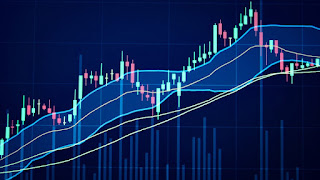
By:  Ivan Cavric   Schaff Trend Cycle is a momentum indicator that is designed to identify trends in the market. It was developed by Doug Schaff and is based on the principle of combining two popular indicators - the Moving Average Convergence Divergence (MACD) and the stochastic oscillator. The Schaff Trend Cycle indicator is calculated using the following steps: Calculate the MACD by subtracting the 26-period exponential moving average (EMA) from the 12-period EMA. Calculate the signal line by taking a 9-period EMA of the MACD. Calculate the slow stochastic oscillator using the high, low, and closing prices over a specified period. Calculate the Schaff Trend Cycle by applying a 10-period EMA to the slow stochastic oscillator. The resulting indicator is a smoothed version of the slow stochastic oscillator that combines the power of the MACD and stochastic oscillator to identify trends in the market. One of the main advantages of the Schaff Trend Cycle indicator is its ability...

Avoiding the 7 Biggest Mistakes Traders Make: Tips for Success in the Market

Image
by: Ivan Cavric Trading can be a challenging and complex endeavor, and even the most experienced traders can make mistakes. Here are seven of the biggest mistakes traders make, and how you can avoid making them: Not having a trading plan: One of the most common mistakes traders make is not having a clear trading plan. A trading plan should include your goals, risk management strategy, and a detailed plan for how you will enter and exit trades. Without a trading plan, you are more likely to make impulsive decisions and be swayed by emotions. Not managing risk: Risk management is an essential part of trading, but many traders ignore it. Without a proper risk management strategy in place, you are more likely to suffer significant losses. It's important to have a plan in place for when things go wrong and to have a stop-loss in place to limit your losses. Over-leveraging: Leverage can be a powerful tool, but it can also be dangerous if not used correctly. Over-leveraging your trades...

Unlocking the Potential of the Gator Oscillator: A Guide to Understanding and Using this Powerful Technical Analysis Tool

Image
by:  Ivan Cavric The Gator Oscillator, also known as the Gator Indicator, is a technical analysis tool that is used to identify market trends and potential changes in momentum. Developed by Bill Williams, a well-known technical analyst and trader, the Gator Oscillator is a combination of two indicators: the Alligator Indicator and the Awesome Oscillator. The Alligator Indicator is a trend-following tool that uses moving averages to help traders identify the direction of the market. The Awesome Oscillator, on the other hand, is a momentum indicator that measures the difference between the 34-period and 5-period simple moving averages. When the two indicators are combined, the Gator Oscillator is able to provide a clearer picture of the market's direction and momentum. The Gator Oscillator is displayed as a histogram on a chart, with the bars representing the difference between the two moving averages. When the bars are above the zero line, it indicates that the market is in an uptre...

Using the DeMarker Indicator to Identify Potential Market Tops and Bottoms

Image
by: Ivan Cavric The DeMarker Indicator, also known as the DeM, is a technical analysis tool that compares the current price action of a financial instrument with its price action over a specified time period. It was developed by Tom DeMark, a market technician and founder of Market Studies, LLC. The DeM is used to identify potential market tops and bottoms, as well as potential trend reversals. The DeM is calculated using the following formula: DeM = (Hn - Ln) / (Hp - Lp) where Hn is the current period's highest price, Ln is the current period's lowest price, Hp is the previous period's highest price, and Lp is the previous period's lowest price. The DeM oscillates between 0 and 1, with readings above 0.7 indicating overbought conditions and readings below 0.3 indicating oversold conditions. A reading above 0.7 is generally considered a sell signal, while a reading below 0.3 is generally considered a buy signal. One of the main advantages of the DeM is that it is a lea...

Unlocking the Power of the Aroon Indicator for Day Trading Success

Image
by:  Ivan Cavric The Aroon indicator is a technical analysis tool that helps traders identify trends and potential trend reversals. It was developed by Tushar Chande in 1995 and is composed of two lines: the Aroon Up and the Aroon Down. The Aroon Up line indicates the strength of the uptrend and is calculated by measuring the number of periods since the highest high was reached. The Aroon Down line indicates the strength of the downtrend and is calculated by measuring the number of periods since the lowest low was reached. When the Aroon Up line is above 70 and the Aroon Down line is below 30, it is considered a strong uptrend. Conversely, when the Aroon Down line is above 70 and the Aroon Up line is below 30, it is considered a strong downtrend. When the two lines are close to 50, it indicates a weak trend or a potential trend reversal. The Aroon indicator can also be used to identify potential trend changes by looking for crossovers between the Aroon Up and Aroon Down lines. A cr...

Understanding the Relative Vigor Index: A Guide for Traders

Image
by: Ivan Cavric The relative vigor index (RVI) is a technical analysis tool that aims to measure the strength of a security's price trend. It is calculated using the difference between the security's closing price and its moving average, and is plotted on a chart alongside the security's price to help traders identify potential buy and sell signals. To calculate the RVI, you first need to calculate the security's moving average. This is done by taking the average of its closing prices over a certain number of periods, such as 10 days or 20 days. The difference between the security's closing price and its moving average is then plotted on a chart as the RVI. The RVI is often used in conjunction with other technical indicators, such as the moving average convergence divergence (MACD) indicator, to provide a more comprehensive view of the security's price trend. If the RVI is rising while the security's price is also rising, it may be a sign of a strong uptren...

Understanding the Money Flow Index: A Technical Indicator for Identifying Reversals and Confirming Trends

Image
by: Ivan Cavric The Money Flow Index (MFI) is a technical indicator that is used to measure the buying and selling pressure of a stock or other financial asset. It is typically used by traders and investors to identify potential reversal points in the market, as well as to confirm trends and trend strength. The MFI is based on the concept of "money flow," which refers to the amount of money that is flowing into and out of a particular asset. When there is a high level of money flow into an asset, it is considered to be a bullish sign, indicating that traders and investors are confident in the asset and are willing to pay higher prices for it. On the other hand, when there is a high level of money flow out of an asset, it is considered to be a bearish sign, indicating that traders and investors are losing confidence in the asset and are willing to sell it at lower prices. To calculate the MFI, a trader or investor needs to have access to three pieces of information: the asset...

Mastering the Average Directional Movement Index: A Comprehensive Guide

Image
by: Ivan Cavric The Average Directional Movement Index (ADX) is a technical indicator used to measure the strength of a trend. It was developed by J. Welles Wilder and is a popular tool among traders and investors to determine whether a market is trending or ranging. In this article, we will discuss the basics of the ADX, how to use it properly, and some potential drawbacks to be aware of. First, let's define what is meant by a trend. A trend refers to the direction in which the price of an asset is moving. For example, if the price of a stock is consistently rising over time, it is said to be in an uptrend. On the other hand, if the price is consistently falling, it is said to be in a downtrend. A trend can also be flat or sideways, meaning that the price is not consistently moving in any particular direction. The ADX is a line on a chart that ranges from 0 to 100 and is calculated using the highs and lows of the past 14 periods (the time frame can be adjusted by the user). A rea...

Understanding and Profitably Using Fibonacci Retracement in Technical Analysis

Image
by: Ivan Cavric Fibonacci retracement is a popular technical analysis tool that uses horizontal lines to indicate areas of support or resistance at the key Fibonacci levels before the price continues in the original direction. These levels are derived from the Fibonacci sequence and are commonly used in conjunction with trend lines to find entry and exit points in the market. The Fibonacci sequence is a series of numbers in which each number is the sum of the two preceding numbers, starting with 0 and 1. The key Fibonacci levels derived from this sequence are 23.6%, 38.2%, 50%, 61.8%, and 100%. To use Fibonacci retracement, you need to first identify the direction of the trend. This can be done using trend lines, moving averages, or other technical indicators. Once you have identified the trend, you can then draw a Fibonacci retracement from the high to the low of the trend. The horizontal lines at the key Fibonacci levels will then act as potential areas of support or resistance. For...

Maximize Your Trading Profits with the Commodity Channel Index: A Comprehensive Guide

Image
by: Ivan Cavric The Commodity Channel Index (CCI) is a momentum-based technical indicator that was developed by Donald Lambert in 1980. It is a versatile tool that is used to identify cyclical turns in commodities, stocks, and other financial instruments. The CCI is based on the idea that prices tend to remain within an average range, with deviations from this range being an indication of an uptrend or a downtrend. The CCI measures the number of standard deviations that the current price is from the average price. When the CCI is above 100, it indicates that the price is above the average and could be overbought. When the CCI is below -100, it indicates that the price is below the average and could be oversold. To calculate the CCI, Lambert first identified the typical price of a commodity by adding the high, low, and closing prices and dividing the sum by three. He then calculated a moving average of the typical price and used it to determine the average deviation from the typical pr...